
Marriage Garden or Marriage Hall in Patna? How to Choose by Season, Rituals and Guests
Updated November 2026 · 16 min read · By the Weddings72 team
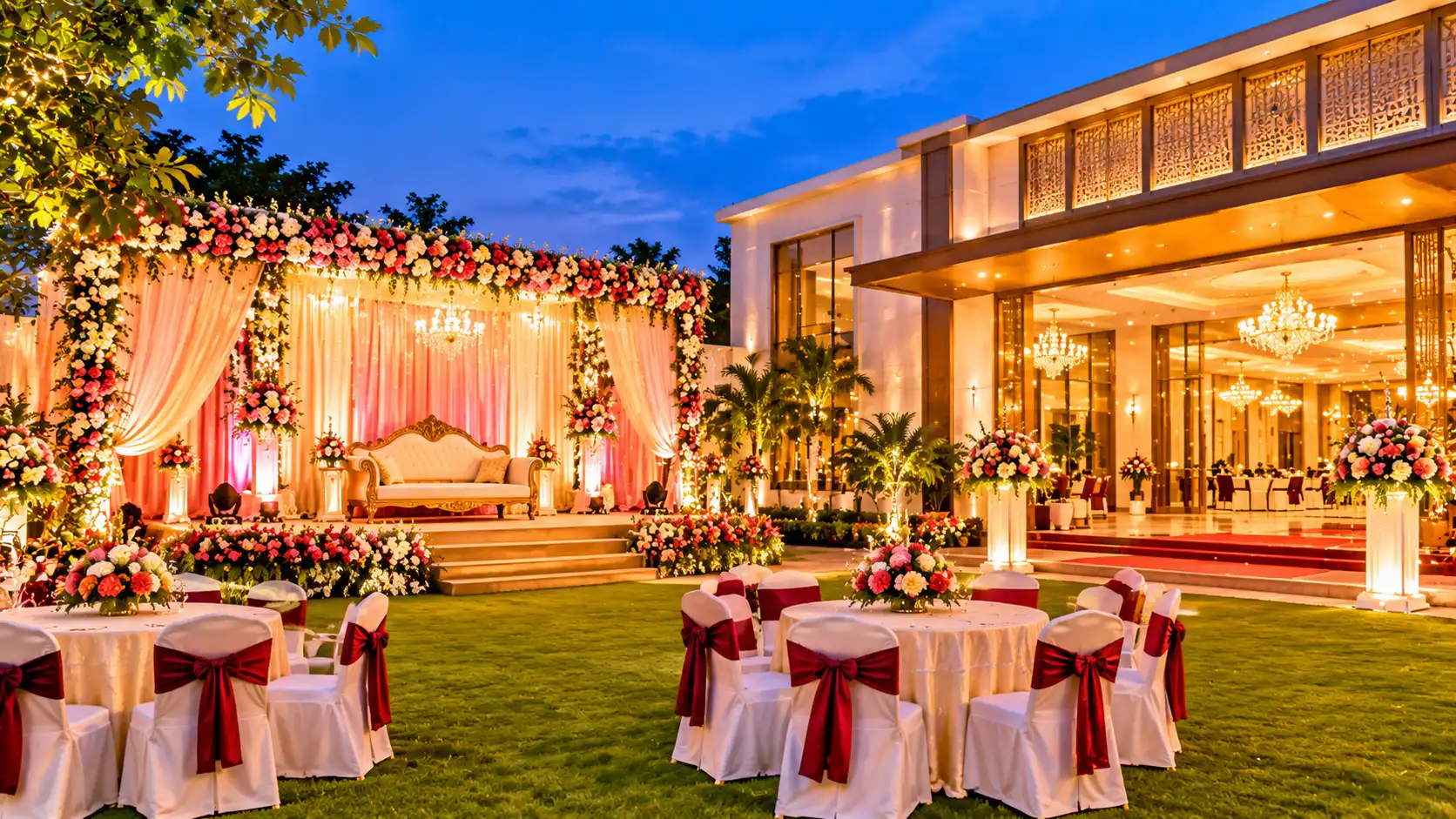
Choose a marriage garden in Patna if your wedding falls in the cooler months, you want open space for the baraat, jaimala and pheras, and you have a covered backup for weather. Choose the best marriage hall in Patna for you if your date is in the heat or monsoon, your guest list includes many elders, or you want controlled lighting, AC and sound. If you can’t decide, a venue with both a hall and a garden gives you the flexibility to use each where it works best.
Every Patna wedding planning conversation has a moment where someone says, “Garden mein karte hain, khula-khula lagega.” And someone else says, “Haan, lekin agar baarish ho gayi toh?”
Both are right. A garden gives you space, sky and photographs that look like a film. A hall gives you comfort, control and zero weather drama. The mistake isn’t choosing one over the other. It’s choosing without thinking about your date, your rituals and your guests.
This guide walks you through that decision step by step, in plain language, with tables you can screenshot and send to the family WhatsApp group. When you’re ready to compare actual venues, our marriage garden in Patna listing lets you filter by capacity and price.
Key takeaways
- Season decides more than style. Gardens shine in cooler, dry months. Halls win in peak summer and monsoon.
- Your rituals matter. Jaimala, pheras and baraat entry love open space. Dinner, speeches and elders’ comfort love a hall.
- Elders and kids change the answer. Seating, shade, washrooms and the walk from parking all matter more than décor.
- The smartest option is often both. One venue with a hall and a garden lets you move the party where it’s comfortable.
- Always have a plan B. For any garden, ask what happens if it rains or the fog rolls in.
Who is this guide for?
This guide is for families and couples in Patna who are deciding between an open-air marriage garden and an indoor marriage hall for a wedding, reception, engagement or sangeet, and for relatives helping from another city.
Use it when you have a rough date and guest count but haven’t locked a venue type. By the end you should know which type suits you, what to check at each and which questions to ask.
It’s not a replacement for a site visit. Venue details change, so confirm everything in writing.
What’s the real difference between a marriage garden and a marriage hall?
The short answer: a marriage garden (or wedding lawn) is an open-air space, usually with a stage and covered areas. A marriage hall is an indoor, usually air-conditioned space. The difference that matters is how each handles weather, space and mood.
| Marriage garden / lawn | Marriage hall / banquet | |
|---|---|---|
| Setting | Open air, natural backdrop | Indoor, controlled environment |
| Weather | Depends on season; needs backup | Unaffected by rain, heat or fog |
| Space | Usually large and flexible | Fixed by walls and pillars |
| Comfort | Cool evenings are lovely; heat and mosquitoes are not | AC, even lighting, quieter |
| Photography | Natural light, golden hour, open skies | Controlled lighting, stage-led |
| Baraat and entry | Easy for a big baraat and dhol | Tighter; check entrance space |
| Sound | Carries further; local limits apply | Contained, easier to manage |
| Best for | Cooler months, large guest lists, outdoor rituals | Heat, monsoon, elders, formal receptions |
Neither is “better”. They’re better for different situations, which is what the rest of this guide helps you work out.
Which one fits your wedding season?
The short answer: gardens are happiest in dry, mild weather, and halls are safest in extreme heat, monsoon and foggy winter nights.
Here’s a typical pattern for Patna. Weather changes year to year, so check the forecast before you commit.
| Months | What it’s usually like | Better fit |
|---|---|---|
| October to November | Pleasant, festive-season crowds | Garden, with a covered backup |
| December to January | Cool evenings, fog is possible | Hall, or garden with heaters and a covered area |
| February | Mild and dry | Garden |
| March to April | Warming up, hot afternoons | Garden for evening events, hall for daytime |
| May to June | Very hot | Hall |
| July to September | Monsoon | Hall |
If you’re still finalising your date, think of it as the first big venue decision. A date in a mild month opens up both options, while a date in peak heat or monsoon narrows it to a hall.
Weather check: a week before an outdoor event, look at the India Meteorological Department forecast and keep your covered backup ready.
Which one fits your rituals?
The short answer: think ritual by ritual. Some moments want sky and space, others want comfort and quiet.
- Baraat arrival: gardens win. A big baraat with dhol, horse or car needs space, and a lawn gives it.
- Jaimala (varmala): both work. A garden stage with open sky looks great, while a hall stage allows controlled lighting.
- Pheras and mandap: if you want fire and an open mandap, a garden suits it, since ventilation is easier. In a hall, check ventilation and smoke arrangements, or use a dedicated mandap hall.
- Dinner: halls are more comfortable when the weather is extreme. In a garden, make sure the dining area is covered and well-lit.
- Speeches and sangeet: halls give better sound control. Gardens need a good sound setup and awareness of local sound limits.
- Vidaai: both work, but gardens give a more cinematic, open send-off.
A good compromise many Patna families choose is rituals outside, dinner inside, which is only possible if your venue has both a garden and a hall.
Which one fits your guest list?
The short answer: the guests who will feel the venue the most are the elders and the little ones, so plan around them.
- Elders: ask for seating near the stage, shade or heating depending on the season, and a short, flat walk from parking to the stage. A garden with uneven ground or a long walk can be tiring.
- Children: a garden gives them space to run, but also needs boundaries around water features and decorations.
- Out-of-town guests: if many are arriving from other cities, a venue with rooms nearby saves a lot of stress. See our guide on wedding halls with rooms for baraat.
- Large guest lists (500+): gardens often have more floating space, but check seated dining capacity and parking.
- Small guest lists (under 150): a hall can feel warmer, because a large garden can look empty with fewer guests.
How much do marriage gardens and halls cost?
The short answer: there’s no fixed “garden is cheaper” or “hall is cheaper” rule. Food is usually the biggest cost either way, and the extras differ.
On Weddings72, venue filters let you search per-plate prices between ₹500 and ₹2,000, and many listings start somewhere around ₹850 to ₹1,200. A mid-range venue like Touch of Cozy lists ₹900 per plate for veg and ₹1,199 for non-veg.
Here’s where costs tend to move:
| Cost item | Garden | Hall |
|---|---|---|
| Food | Per-plate, similar for both | Per-plate, similar for both |
| Weather cover (tent, canopy) | Often extra | Not needed |
| Lighting | Usually extra, to light a large open space | Often partly included |
| Cooling or heating | Heaters in winter, fans or coolers in summer | AC usually included |
| Generator backup | Important and sometimes extra | Important, check coverage |
| Décor | Larger space can need more décor | Smaller space, easier to fill |
For a deeper look at how food and venue costs add up, see our wedding venue and catering cost guide for Patna. Always ask for a written quote that lists taxes, hall rent, décor, generator and overtime, then add 10 to 15 percent for extras.
Is a hall-plus-garden venue the smartest choice?
The short answer: for many Patna families, yes. It gives you the garden’s space and the hall’s safety net in one booking.
Take Touch of Cozy as an example. It has an indoor banquet hall and an open-air wedding lawn, each seating about 300 guests and holding up to 500, plus 5 rooms for lodging and parking for around 40 cars. A typical plan there would be the jaimala and pheras on the lawn, then dinner in the hall, with the hall as the backup if the weather turns.
The benefits of a combined venue:
- A built-in plan B. If rain or fog arrives, you move indoors without scrambling.
- Variety for guests. The change of scene feels like a bigger event.
- One team and one quote. Décor, food and coordination come from one place.
- Easier timing. The hall can be set up for dinner while rituals happen outside.
When you compare venues, ask whether the hall is truly included as a backup, or priced as a separate booking.
How do you find the best marriage garden in Patna?
The short answer: judge a garden on how it handles weather, light, comfort and crowd flow, not just how green it looks in photos.
Walk through this checklist in the evening:
- Covered backup: is there a roofed hall, canopy or tent area, and who pays for it?
- Ground: is the lawn even, dry and easy to walk on, especially for elders and heels?
- Lighting: are paths, stage, dining and parking well lit after dark?
- Mosquitoes and dust: ask about pest control, and notice the air quality at dusk.
- Power backup: does the generator cover lights, sound and the kitchen?
- Washrooms: enough, clean and easy to find, with separate ones for the bridal party.
- Heating or cooling: heaters or bonfire areas in winter, fans or coolers in summer.
- Sound rules: many venues stop loud music at a fixed time, so ask what it is.
- Parking and entry: can the baraat enter without blocking guests?
- Drainage: what happens to the lawn after rain?
Want more ideas for outdoor layouts and budgets? Our guide to an open-stage wedding in Patna covers lawn setups and costs.
How do you find the best marriage hall in Patna?
The short answer: the best marriage hall in Patna is the one with honest capacity, reliable cooling, good sightlines and food you’d happily serve your own family.
Check these on your visit:
- Seated vs floating capacity: ask for both. A hall that “holds 500” may seat 250 at tables.
- AC coverage: confirm exactly which areas are cooled, including the dining area.
- Ceiling height and pillars: pillars can block the stage view and break up the floor.
- Stage and sightlines: sit at the back and check whether you can see the stage.
- Kitchen and counters: how many counters will run for your guest count?
- Entry and exit: is there a separate entrance for the baraat and a clear exit?
- Rooms and bridal room: is there a place for the couple and family to get ready?
- Sound control: is there a cut-off time, and does sound leak into neighbouring areas?
- Parking: how many cars and two-wheelers, and is there help to manage it?
- Cleanliness: washrooms, floors and the kitchen area say a lot.
A simple scoring sheet
Score each venue out of 10 on every row, then add them up. It keeps family opinions grounded.
| Criterion | Why it matters | Garden A | Hall B |
|---|---|---|---|
| Capacity (seated and floating) | Comfort for your real guest list | ||
| Weather backup | Peace of mind | ||
| Parking and access | First and last impression | ||
| Food and counters | What guests remember | ||
| Comfort (AC, heating, washrooms) | Elders and kids | ||
| Total quote, in writing | No surprises | ||
| Rooms and facilities | Out-of-town guests |
Three sample plans to borrow from
These are example situations, not real families, to show how the decision can play out.
Plan 1: The January wedding for 350 guests.
Evenings are cool and fog is possible. A hall with a covered lawn, or a garden with heaters and a roofed dining area, works best. The rituals could happen early evening on the lawn, with dinner indoors.
Plan 2: The May reception for 250 guests.
It’s hot, so a fully air-conditioned hall is the sensible call. If the family loves the garden idea, a short outdoor photo session at sunset and dinner indoors keeps everyone comfortable.
Plan 3: The February engagement for 120 guests.
Mild weather makes a garden lovely, but 120 guests can look sparse on a huge lawn. A smaller garden or a hall with a small outdoor corner feels warmer.
What is your plan B for rain, fog and noise?
The short answer: ask the venue for a written weather and sound plan before you pay.
- Rain: is there a covered hall, tent or canopy, and who sets it up and pays?
- Fog and cold: are heaters, bonfire areas or indoor space available?
- Heat: are fans, coolers or shaded dining areas provided?
- Power cut: how quickly does the generator take over, and what does it cover?
- Sound: what is the music cut-off time? Local rules and neighbours can limit loud music late at night, so ask the venue what applies.
A venue that answers these calmly and clearly is usually well-run.
What are the 2026 trends for marriage gardens and halls in Patna?
The short answer: smaller guest lists, better food and more personal touches.
- Golden-hour pheras. Couples are timing outdoor rituals to catch the evening light, then moving indoors for dinner.
- Day-to-evening weddings. More families shift events earlier to get better light and cooler temperatures.
- Warm, simple décor. Fresh flowers, fairy lights and soft lighting are replacing heavy themes.
- Sustainable touches. Reusable props, fewer plastics and local flowers are growing in popularity.
- Live counters with a local twist. Chaat and dosa stations sit beside litti-chokha and sattu drinks.
- Reel-ready details. Entry paths, stage lighting and photo corners are planned with phones in mind.
- Winter setups. For cooler months, warm lighting, shawls for guests and cosy seating areas feel thoughtful. Our winter wedding décor ideas for Patna has 15 ways to do it.
- AI first, verify second. Many couples now ask an AI assistant for venue suggestions. It’s a good start, but confirm prices, capacity and availability directly with the venue.
What mistakes should you avoid?
- Choosing a garden without a covered backup
- Booking in the evening season without checking fog and cold
- Underestimating the guest list, which almost always grows
- Skipping the evening visit
- Assuming “AC” means the whole venue is cooled
- Ignoring parking and the baraat route
- Comparing quotes that include different things
- Paying an advance without a written agreement
How do you check a venue and caterer are trustworthy?
The short answer: ask for the food licence, get promises in writing and know where to take a dispute.
- Food licence: ask the caterer for their FSSAI licence number and check it on the official FoSCoS portal.
- Written agreement: it should list the date, timings, guest count, per-plate rate, taxes, advance, refund terms and inclusions.
- Dispute help: if a booking or refund issue isn’t resolved, you can register a complaint with the National Consumer Helpline.
The bottom line
The best venue isn’t the greenest garden or the grandest hall. It’s the one that suits your date, your rituals and the people you love most. Pick a garden for mild weather and open rituals. Pick a hall for heat, monsoon, elders and control. And if you can, pick a venue that gives you both. Visit in the evening, ask about plan B, and get everything in writing.
Ready to shortlist?
Winter dates fill early, and the best gardens and halls go first. Share your date and guest count with the Weddings72 team, and we’ll help you compare options and check availability.
Frequently asked questions
What is the difference between a marriage garden and a marriage hall?
A marriage garden is an open-air lawn, while a marriage hall is an indoor, usually air-conditioned space. Gardens suit mild weather and large open rituals, and halls suit heat, monsoon and comfort.
Which is better for a wedding in Patna, a garden or a hall?
It depends on your date, guest list and rituals. Gardens work well in cooler, dry months, while halls are safer in peak summer, monsoon and foggy winter nights.
What is the best month for a marriage garden in Patna?
Cooler, drier months like October, November and February are usually the most comfortable. Check the forecast before you commit.
Can I use both a garden and a hall at the same venue?
Yes. Some venues, like Touch of Cozy, offer both, so you can hold rituals outside and dinner inside, with the hall as a weather backup.
What if it rains at a marriage garden?
Ask for a written plan. A good venue will have a covered hall, tent or canopy, and will tell you who arranges and pays for it.
Is a marriage garden cheaper than a marriage hall?
Not necessarily. Food costs are similar, but gardens may need extra spend on lighting, weather cover and generator backup. Compare full written quotes.
How much does a marriage hall cost per plate in Patna?
Listings on Weddings72 commonly start from about ₹850 to ₹1,200 per plate, depending on the venue, menu and date.
How many guests can a marriage garden hold?
Capacity varies widely, from small lawns for around 200 guests to large ones for 500 or more. Ask for both seated and floating capacity.
Which area of Patna is best for a marriage garden?
Venues are spread across the city. Choose the area that’s easiest for most guests to reach, and check parking and the baraat route.
Is a marriage garden good for elders?
It can be, if it has even ground, shade or heating, nearby seating and a short walk from parking. If not, a hall may be more comfortable.
Are marriage gardens in Patna air-conditioned?
Open lawns aren’t, but the covered hall or dining area may be. Ask which areas are cooled.
Can I bring my own caterer or decorator?
It depends on the venue. Some allow outside vendors, so confirm in writing, along with any extra charges.
How early should I book a marriage garden or hall in Patna?
For winter wedding dates, book 4 to 6 months ahead. For smaller events, 4 to 8 weeks is usually enough.
What should I check on a site visit?
Visit in the evening and check lighting, parking, washrooms, covered backup, power backup, AC coverage, food counters and sound rules.
Do I need to check the caterer’s licence?
Yes. Ask for the FSSAI licence number and verify it on the FoSCoS portal.
How do I compare marriage gardens and halls quickly?
Use the filters on Weddings72 for price, capacity and venue type, shortlist three, and score each on the sheet above.